
Quick answer
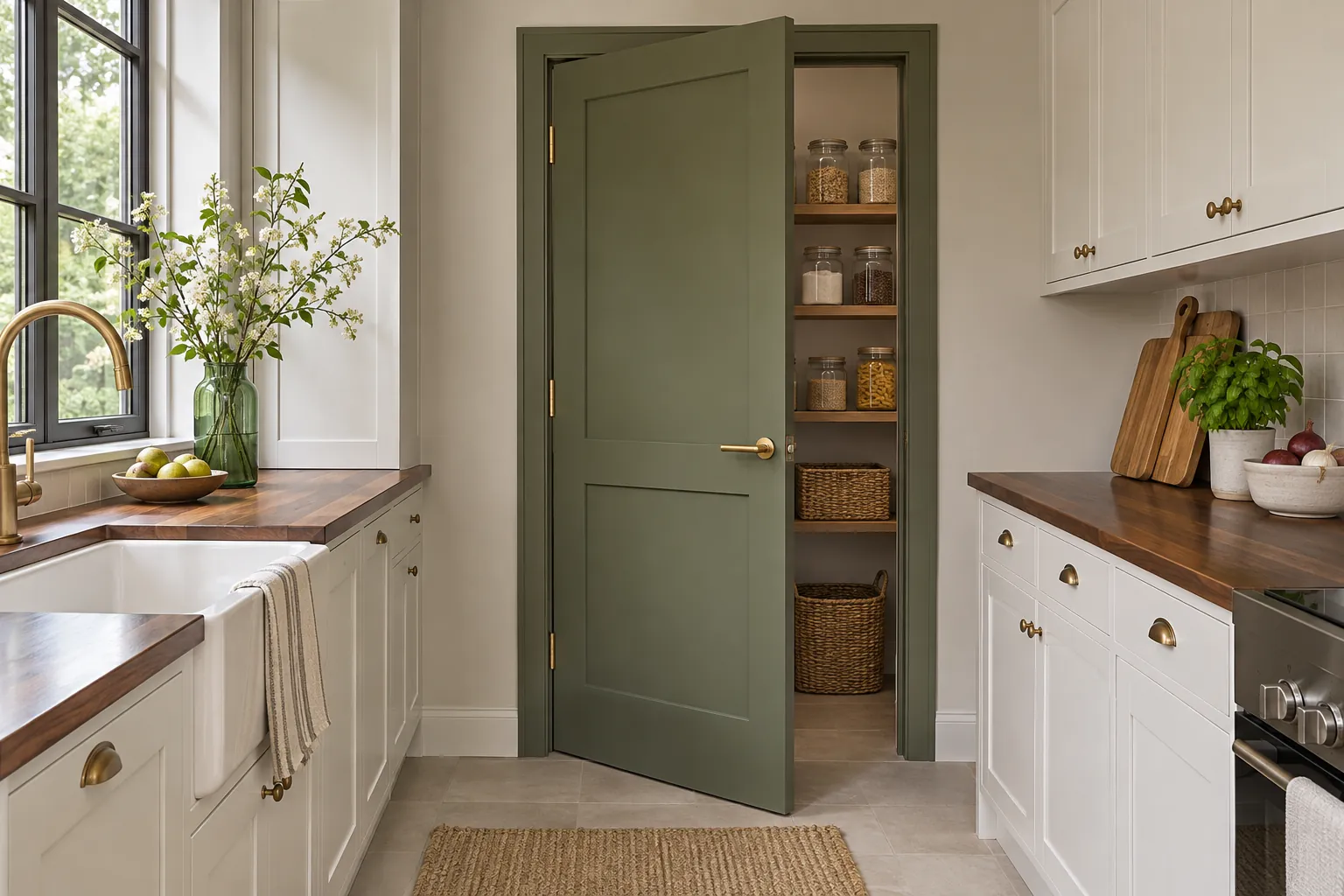
In a small kitchen, choose the pantry door around the conflict you can measure. A hinged door is worth keeping if the swing stays clear. A bifold may reduce the projection of a full-width panel; a pocket door may avoid that swing where the wall is suitable. Neither is automatically the best choice for every small kitchen.
The goal is a pantry you can use while preparing food, unloading groceries and moving around other people. Saving a patch of floor on a plan is less helpful if the new system blocks a drawer or makes shelves harder to reach.
Find the point where movement collides
Open the dishwasher, refrigerator, nearby cabinets and pantry in the combinations you actually use. Watch handles as well as panels. Mark the normal walking route between work areas and the pantry.
Check whether the conflict occurs only when everything is open or during an ordinary task such as taking out ingredients. That distinction helps you decide whether a new door mechanism solves a frequent problem or adds complexity for a rare inconvenience.
Compare the practical options
| Option | Problem it may address | Check before choosing |
|---|---|---|
| Keep or adjust a hinged door | Existing operation is mostly workable | Swing, latch, frame and nearby handles |
| Bifold system | A single panel projects too far | Folded-stack depth and access at the opening's edges |
| Pocket system | A swing area needs to remain clear | Wall construction, services and product-specific framing |
| Wall-mounted slider | A clear adjacent wall is available | Wall storage, switches, trim and parked-panel position |
| Bypass panels | A wider opening can work with partial access | Whether a panel blocks a frequently used shelf or pullout |
An outward or inward swing change can simply move the problem. Evaluate the kitchen and the pantry together, and have any applicable access or building requirements checked before altering the opening.
If you are considering a pocket door
Check the wall before choosing the panel finish. Pocket systems need a suitable wall cavity and an appropriate frame and hardware package. Services, structural details or adjoining cabinetry may affect the work.
Johnson Hardware's product range and installation library show why system-specific instructions matter. Do not assume a pocket conversion is just a different track fitted to an existing hinged opening. Ask what wall work, trim changes, panel preparation and future maintenance access are involved.
If you are considering a bifold
Mark the folded panels in their open position. Their stack and hardware occupy space, so check the shelf corners and any internal drawers closest to the sides.
Try the opening sequence with something in your hands. Consider whether the handle is easy to reach and whether the door can be moved without standing in an inconvenient place. Follow the chosen hardware's requirements for panel dimensions, weight and clearances.
Keep storage access in the decision
A door choice should not be separated from shelf depth, pullouts or the objects being stored. A narrow access route might be manageable for small packets but awkward for a large appliance or a wide bin.
If you are ordering new storage organizers, show the supplier the proposed open-door arrangement. A drawer that fits inside a cabinet on paper may still be obstructed by a panel, jamb or folded stack. Confirm its complete movement before committing to both purchases.
Choose a finish you can maintain
Kitchen use can mean frequent handling and routine cleaning. Check the door manufacturer’s finishing and care guidance rather than assuming a primed or decorative surface is ready for every kind of cleaning product. Avoid making pest-control or airtightness claims about an ordinary pantry door.
Before ordering, summarize the conflict, the proposed solution and the remaining tradeoff in one sentence. If you cannot identify the practical improvement, keeping and adjusting the current hinged arrangement may deserve another look.
Our pantry door overview covers the wider material and hardware decisions. For folding and overlapping panels, read the bifold versus sliding comparison with your kitchen's storage layout beside you.
Sources and methodology
- Johnson Hardware: pocket door hardware — Pocket systems as matched frame and hardware products.
- Johnson Hardware: bi-folding door hardware — Product-specific folding hardware choices.
- Johnson Hardware: installation instructions — Panel preparation, opening dimensions and compatible hardware.
- Masonite: professional resources — Manufacturer finishing and care documents.
This is a desk-researched comparison of materials and layout choices, not a hands-on product test. Manufacturer guidance applies to the products and assemblies it describes. Our room recommendations are editorial judgments; confirm the specifications and installation instructions for the exact door and hardware you choose.